
Silicon Ball Lens
- Home
- Balls & Hemispheres
- Silicon Ball Lens
Custom Crystalline Silicon Ball Lenses for Infrared Optical Applications
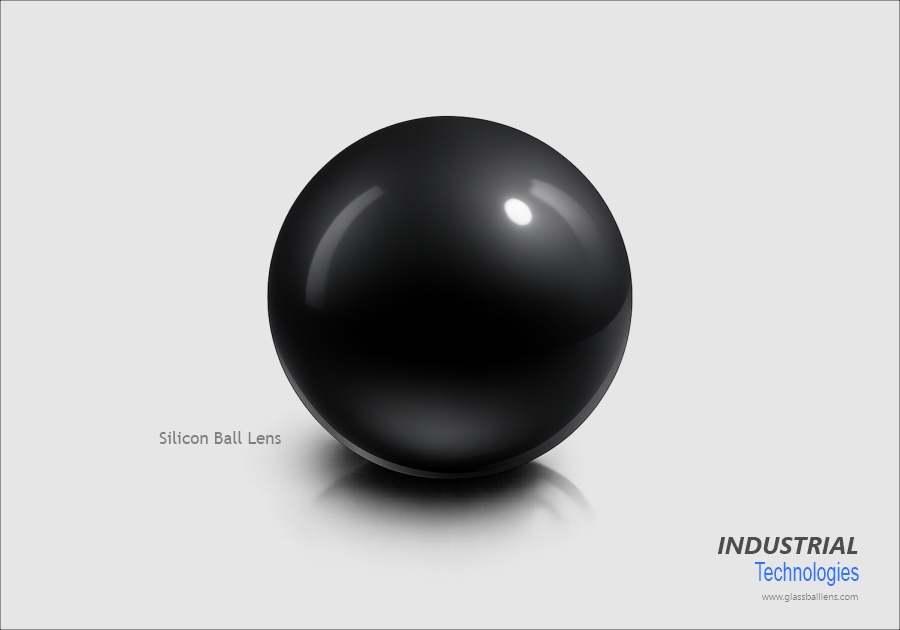
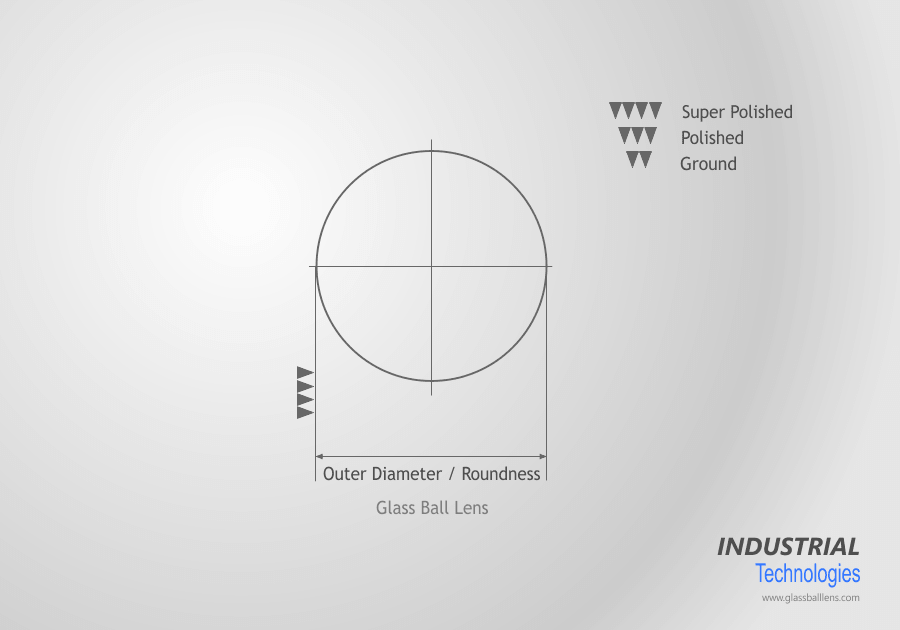
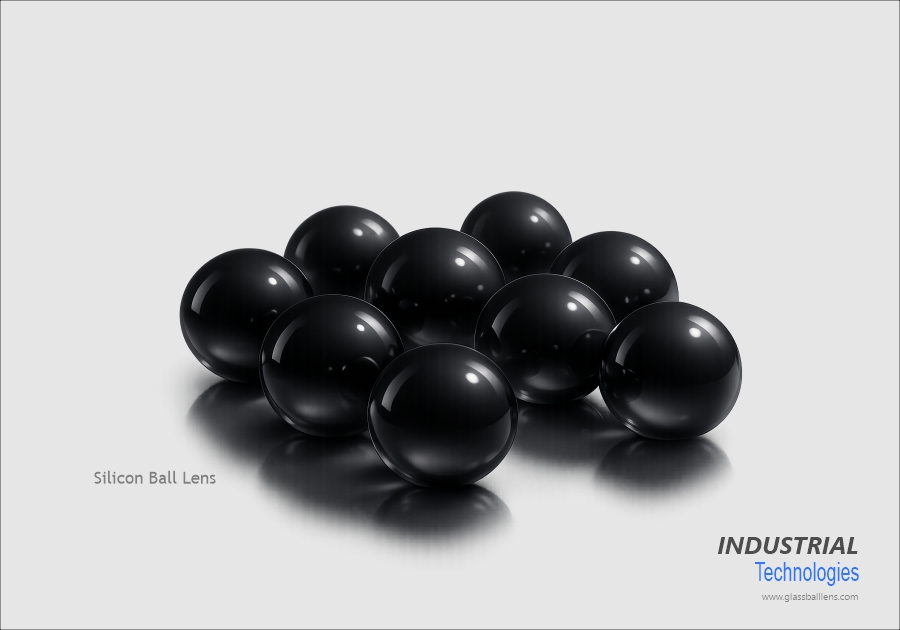
Industrial Technologies manufactures custom Silicon Ball Lenses and Crystalline Silicon Ball Lenses for infrared optical systems, sensing devices, optoelectronic assemblies and OEM applications. Silicon balls are manufactured in diameters from 0.30 mm to 3.0 mm, with a standard diameter tolerance of ±0.0025 mm.
Material grade, silicon purity, crystal structure, orientation, resistivity, surface finish, optical coating, inspection method and packaging can be selected according to the customer’s drawing and application requirements. We support prototype development, qualification orders and repeat bulk production for international customers.
- Diameter range
0.30–3.0 mm
- Standard diameter tolerance
±0.0025 mm
- Material
Silicon selected according to customer requirements
- Coating
Uncoated or custom AR coated
- Inspection
100% inspection before delivery
- Cleaning and packing
Class 100 cleanroom
- Supply model
Custom manufacturing and bulk OEM supply
Request a Custom Quote get a free Quote
Custom Silicon Ball Lens Manufacturer for Bulk Requirements
A silicon ball lens is rarely selected only by diameter. Its performance depends on the silicon grade, operating wavelength, refractive index, crystal properties, dimensional accuracy, surface condition and optical coating.
Industrial Technologies manufactures each silicon ball lens according to the customer’s optical, mechanical and commercial requirements. Customers can define the required material, dimensions, tolerances, coating wavelength, surface-quality standard, inspection documentation, packaging format and production quantity.
Our custom manufacturing capability supports requirements such as:
- Monocrystalline or other specified crystalline silicon
- Customer-defined silicon purity
- Required crystal orientation
- Intrinsic, N-type or P-type material
- Customer-defined doping and resistivity
- Custom diameter and dimensional tolerance
- Application-specific sphericity and roundness
- Defined scratch-dig and surface-roughness requirements
- Uncoated or wavelength-specific AR-coated surfaces
- Prototype, qualification and bulk production quantities
- Customer-supplied material or approved raw-material grades
- Custom inspection reports and lot documentation
- Cleanroom and automation-compatible packaging
Every requirement is reviewed against the customer’s drawing, application, required quantity and acceptance criteria before production.
Silicon Ball Lens Specifications
The following table combines our established silicon ball manufacturing capability with the parameters that can be customized for individual projects.
- Product type
Silicon ball lens, crystalline silicon ball lens and custom silicon spherical component - Material
Silicon grade selected according to customer requirement - Crystal structure
Monocrystalline, single-crystal, crystalline or specified silicon material - Silicon purity
According to customer specification and approved material availability - Crystal orientation
Customer-specified orientation such as 100, 110 or 111 - Conductivity
Intrinsic, N-type or P-type, where required - Doping
Customer-specified material and concentration, subject to raw-material availability - Resistivity
Selected according to optical and application requirements - Diameter range
0.30 mm to 3.0 mm - Standard diameter tolerance
±0.0025 mm - Special diameters
Evaluated according to drawing and quantity - Tighter tolerance
Evaluated according to diameter, material and order volume - Sphericity and roundness
Manufactured according to customer drawing or agreed inspection standard
- Surface appearance
No visible scratch or dig at 50× magnification, depending on ball diameter - Scratch-dig rating
Customer-defined standard can be evaluated - Surface roughness
Manufactured according to the agreed optical requirement - Typical material transmission range
Approximately 1.2–7.0 µm, depending on silicon grade and material conditions - Typical refractive index
Approximately 3.4 in the infrared; the exact value depends on wavelength, temperature and material - Optical coating
Uncoated or custom anti-reflective coating - Coating wavelength
Designed according to the customer’s operating wavelength - Inspection
100% inspection for size, dimensional accuracy, polish level and cleanliness - Cleaning
Class 100 cleanroom cleaning - Packaging
Waffle trays, clean vials or customer-defined packaging - Production model
Prototype, qualification lot, repeat order and bulk production - Documentation
Inspection report, material certificate, Certificate of Conformity or other agreed documents - Supply
International OEM and bulk supply
Important: Optical and dimensional values outside the stated standard range are subject to engineering review. Final specifications are confirmed in the approved drawing or purchase specification.
What Is a Crystalline Silicon Ball Lens?
A crystalline silicon ball lens is a miniature spherical optical component manufactured from silicon material with a defined crystalline structure. Its complete spherical geometry enables it to collect, focus, collimate or redirect infrared radiation within a compact optical assembly.
Silicon has a high refractive index of approximately 3.4 in the infrared range. This gives a silicon ball lens strong optical power within a very small diameter. The combination of high refractive index, low material density, mechanical durability and infrared transmission makes silicon useful for compact infrared optical designs.
Depending on the application, customers may specify monocrystalline silicon, single-crystal silicon, a particular crystal orientation, controlled electrical resistivity, defined purity or another approved optical-grade silicon material.
Industrial Technologies can manufacture the ball lens from the selected silicon material according to the required diameter, tolerance, surface condition and optical coating.
Why Silicon Is Used for Infrared Ball Lenses?
Infrared transmission
Silicon commonly provides useful transmission from approximately 1.2 to 7.0 µm, depending on material grade, purity, doping, thickness and operating conditions. This makes silicon particularly relevant to near-infrared and mid-wave infrared optical systems.
The required operating wavelength should always be provided during quotation so that the correct material grade and coating can be evaluated.
High refractive index
Silicon has a refractive index of approximately 3.4 in the infrared. The high index allows a small spherical component to provide substantial optical power, supporting compact focusing and coupling arrangements.
Because refractive index changes with wavelength and temperature, the customer should provide the design wavelength when focal performance is critical.
Low density
Silicon has a typical density of approximately 2.329 g/cm³. It is considerably lighter than some alternative infrared optical materials, which can be beneficial in miniature, portable, airborne and weight-sensitive systems.
Mechanical durability
Silicon is a hard and durable material. Its mechanical properties make it suitable for optical components that must retain their form and performance during handling, assembly and operation in demanding environments.
Thermal stability
Silicon offers good thermal stability and thermal conductivity. These characteristics can help an optical component manage temperature variation and maintain dimensional stability in industrial and infrared applications.
Compact spherical geometry
A complete ball lens provides a compact optical form with rotational symmetry. The component can be integrated into small housings, sensor assemblies, optical packages and miniature infrared systems where available space is limited.
Typical Silicon Material Properties
These are general reference values for silicon material. The exact values applicable to a supplied ball lens depend on the selected silicon grade, crystal structure, doping, resistivity, wavelength, temperature and material certificate.
- Chemical symbol
Si - Atomic weight
28.086 - Density
2.329 g/cm³ - Melting point
Approximately 1412°C
- Boiling point
Approximately 2878°C - Mohs hardness
Approximately 7 - Typical infrared transmission range
Approximately 1.2–7.0 µm - Typical infrared refractive index
Approximately 3.4
- Crystal structure
Defined according to selected silicon material - Purity
Customer-specified - Orientation
Customer-specified - Resistivity
Customer-specified
These figures are material-reference values and should not be treated as the guaranteed specification of every silicon ball lens. Guaranteed values are defined in the customer-approved drawing, material certificate or inspection requirement.
Silicon Ball Lens Design Parameters You Can Specify
1. Silicon material and crystal properties
The optical performance of a crystalline silicon ball lens begins with the raw material. Customers can specify:
- Monocrystalline silicon
- Single-crystal silicon
- Crystalline silicon
- Float-zone or Czochralski silicon, where required
- Silicon purity
- Crystal orientation
- Intrinsic, N-type or P-type material
- Doping material
- Electrical resistivity
- Required material certificate
- Approved raw-material manufacturer
- Customer-supplied silicon material
Material selection should be based on the operating wavelength, optical loss, environmental conditions and system-level requirements.
2. Ball diameter and dimensional tolerance
Industrial Technologies manufactures silicon balls from 0.30 mm to 3.0 mm in diameter, with a standard tolerance of ±0.0025 mm.
Customers may also specify:
- Nominal diameter
- Diameter tolerance
- Lot-to-lot diameter variation
- Within-lot diameter variation
- Sphericity
- Roundness
- Clear aperture
- Maximum allowable surface defects
- Special dimensional inspection method
- Drawing-based acceptance limits
Tighter or special dimensional requirements are evaluated according to the ball diameter, material, quantity and measurement method.
3. Optical performance
Where optical performance is critical, the enquiry should identify:
- Operating wavelength or wavelength band
- Required transmission
- Refractive index at the design wavelength
- Effective focal length
- Back focal length
- Numerical aperture
- Beam diameter
- Input and output medium
- Required working distance
- Focusing or collimation function
- Detector, source or fibre dimensions
- Permitted optical loss
- Operating temperature
These details help determine whether the proposed silicon grade, ball diameter and coating are appropriate for the optical system.
4. Surface quality and polish
Surface requirements can be defined using the customer’s preferred inspection standard. Available requirements may include:
- Scratch-dig rating
- Surface roughness in Ra
- Microscopic appearance
- Maximum allowable pits
- Maximum allowable chips
- Polish level
- Clear aperture
- Cosmetic acceptance limits
- Functional optical acceptance criteria
Our standard visual capability provides no visible scratch or dig at 50× magnification, depending on the silicon ball diameter. Where a formal scratch-dig or surface-roughness value is required, it should be included in the enquiry or drawing.
5. Optical coating
Silicon has a high refractive index and therefore produces significant reflection when used without an optical coating. A wavelength-specific anti-reflective coating can reduce reflection and improve transmission through the silicon ball lens.
Customers can specify:
- Uncoated silicon ball lens
- Single-wavelength AR coating
- Dual-wavelength AR coating
- Broadband AR coating
- Mid-wave infrared coating
- Target centre wavelength
- Required coating bandwidth
- Minimum transmission
- Maximum reflectance
- Angle of incidence
- Coating durability
- Environmental testing
- Full spherical-surface coating
Depending on the coating design, wavelength and silicon material, AR-coated silicon ball lenses can provide substantially higher transmission than uncoated components. Coating performance is confirmed for the agreed wavelength band rather than stated as one universal value.
[Learn more about our AR coated ball lens capability.]
6. Inspection and documentation
The required inspection level can be selected according to the application and purchase specification.
Available inspection and documentation requirements may include:
- Sphericity or roundness inspection
- Surface-quality inspection
- Microscopic inspection
- Surface-roughness measurement
- Coating inspection
- Transmission testing
- First Article Inspection
- Lot inspection report
- Certificate of Conformity
- Raw-material certificate
- Lot traceability
- Customer-specific quality plan
- Customer-defined sampling plan
Every silicon ball lens is inspected for size, dimensional accuracy, polish level and cleanliness before delivery.
7. Packaging
Silicon ball lenses can be packed according to the customer’s assembly, handling and automation requirements.
Packaging options may include:
- Waffle trays
- Clean glass vials
- Anti-static plastic vials
- Individual cavity packaging
- Bulk clean packaging
- Customer-specified tray layouts
- Pick-and-place-compatible packaging
- Lot-labelled packaging
- Class 100 cleanroom packaging
- Export packaging
The correct packaging method should be selected according to ball diameter, quantity, coating, handling sensitivity and the customer’s production process.
AR Coated Silicon Ball Lens
The high refractive index that gives silicon its strong optical power also creates substantial surface reflection. For applications where maximum infrared throughput is important, an AR coated silicon ball lens can be manufactured with a coating designed for the required operating wavelength.
Unlike a flat optic, a ball lens has a continuous spherical surface. Coating uniformity around the sphere is therefore an important manufacturing and inspection consideration.
Customers should provide:
- Centre wavelength
- Required wavelength band
- Minimum transmission
- Maximum allowable reflection
- Angle-of-incidence conditions
- Environmental requirements
- Ball diameter
- Silicon material
- Quantity
- Inspection method
Depending on the coating design and wavelength, an appropriate AR coating can significantly reduce reflection and support transmission approaching the customer’s required level. Final coating performance is defined in the approved specification.
Industrial Technologies can support coating development from initial samples to repeat bulk quantities.
Applications of Silicon Ball Lenses
Custom silicon ball lenses can be engineered for infrared systems that require compact focusing, collection, collimation or optical coupling.
Infrared sensors and detectors
A silicon ball lens can collect incoming infrared energy and direct it toward a miniature detector. Ball diameter, working distance, coating and alignment requirements can be selected around the detector size and operating wavelength.
Mid-wave infrared optical systems
Silicon is especially relevant to designs operating within the material’s useful near- and mid-infrared transmission region. Applications may include compact sensing, monitoring, detection and imaging assemblies.
Laser focusing and collimation
The high refractive index of silicon allows a small ball lens to provide strong focusing power. A custom lens may be designed to focus or collimate an infrared laser beam where compact dimensions are required.
Source-to-detector coupling
Silicon ball lenses may be integrated between an infrared source and detector to improve light collection or direct energy toward the active area of the receiving component.
Fibre-to-detector and detector-to-fibre coupling
Where the selected fibre, source and detector operate within the appropriate wavelength range, a silicon ball lens can be evaluated for coupling light between components.
Spectroscopy and gas sensing
Infrared spectroscopy and gas-analysis systems often require efficient control of light at specific absorption wavelengths. A custom silicon ball lens can be manufactured according to the operating band, source geometry and detector arrangement.
Optoelectronic packages
The compact spherical form can be integrated into miniature optical and optoelectronic packages where available space is restricted and repeatable bulk production is required.
Aerospace and industrial sensing
Silicon’s relatively low density, hardness and thermal properties can make it useful for compact sensing systems exposed to demanding operating conditions.
Application suitability must be confirmed against the complete optical design. Silicon is generally selected for infrared rather than visible-light applications and is not normally the first choice for conventional 8–14 µm long-wave infrared systems.
When Should You Select a Silicon Ball Lens?
A silicon ball lens should be considered when:
- The system operates within a suitable infrared wavelength range
- A compact spherical focusing component is required
- High refractive index is beneficial
- The optical assembly has limited space
- Low material weight is important
- The system requires a durable optical material
- The application requires custom dimensions
- A wavelength-specific AR coating can be used
- The project requires repeatable bulk manufacturing
- The component must be supplied with controlled inspection and packaging
Another material may be more appropriate when the system operates primarily in the visible range or outside silicon’s useful infrared transmission region. Customers uncertain about material selection should provide the operating wavelength, application and optical drawing for evaluation.
Custom Manufacturing Process
Raw-material review
Incoming silicon material is checked against the agreed material specification before manufacturing. The raw-material requirement may include grade, purity, crystal orientation, resistivity, doping, traceability or a customer-approved source.
Precision cutting
Silicon raw material is cut into controlled preforms using precision equipment. Accurate initial sizing supports material utilization and dimensional consistency during later processing.
Sphere generation and grinding
The prepared silicon pieces are processed into spherical form. Controlled grinding stages progressively develop the required ball diameter and spherical geometry.
Precision polishing
The silicon balls are polished to achieve the agreed surface condition, polish quality and visual acceptance standard.
Cleaning
Care is maintained throughout processing, including ultrasonic cleaning where appropriate. Finished products undergo final cleaning in a controlled environment.
Inspection
Every silicon ball lens is checked for Size, Dimensional accuracy, Polish level, Surface appearance and Cleanliness.
Inspection is performed according to the approved specification and agreed measurement method.
Cleanroom packing
Finished silicon ball lenses are cleaned and packed in a Class 100 cleanroom area. Packaging is selected according to the ball diameter, coating condition, quantity and customer handling requirements.
[View our ball lens manufacturing process.]
Quality Control for Silicon Ball Lenses
Quality requirements for a bulk order must remain consistent from the qualification lot through repeat production. Industrial Technologies follows defined manufacturing and inspection processes to maintain dimensional, surface and cleanliness requirements.
Our silicon ball-lens quality process includes:
- Raw-material verification
- Controlled dimensional processing
- Inspection during production
- 100% final inspection
- Visual inspection at up to 50× magnification
- Size and accuracy verification
- Polish-level inspection
- Cleanliness inspection
- Class 100 cleanroom cleaning
- Controlled packaging
- Lot identification and documentation as agreed
Customer-specific inspection methods, acceptance criteria and reports can be incorporated into the approved production specification.
Prototype to Bulk Silicon Ball Lens Production
Industrial Technologies supports customers at different stages of product development.
Prototype and development samples
Initial samples can be manufactured for optical evaluation, coating trials, assembly testing or design validation.
Qualification lots
Once the initial design has been reviewed, a controlled qualification quantity can be produced using the proposed material, process, coating and inspection method.
Bulk production
After specification approval, the process can be scaled for repeat bulk manufacturing. Production planning can include agreed lot sizes, inspection frequency, packaging and delivery schedules.
Repeat-order consistency
The approved drawing, material requirement, inspection criteria and packaging instructions form the basis for repeat orders.
The company’s overall ball-lens production capacity exceeds five million pieces per month, supporting customers that require stable and scalable supply.
Why Choose Industrial Technologies?
Custom manufacturing rather than fixed catalogue supply
We manufacture silicon ball lenses according to the customer’s drawing, optical system and commercial requirement instead of restricting the buyer to a small set of standard configurations.
Experience in precision ball-lens manufacturing
Industrial Technologies specializes in precision balls, ball lenses and hemispherical components made from optical glasses, synthetic materials and single-crystal materials.
Swiss technology and precision equipment
Our manufacturing facility uses Swiss machines and precision measuring instruments to support repeatable ball-lens manufacturing.
In-house manufacturing control
Core ball-lens operations, from raw-material preparation to finishing, inspection, cleaning and packing, are managed through controlled manufacturing processes.
Prototype-to-volume support
Customers can begin with development samples, proceed to qualification and then scale the approved specification to bulk production.
Overall capacity exceeding five million pieces per month
Our established manufacturing infrastructure supports high-volume and repeat-order requirements.
International supply experience
More than 95% of the company’s overall sales are supplied to international markets, including customers in the USA, Europe, Japan, China and Vietnam.
Class 100 cleaning and packing
Finished silicon ball lenses are cleaned and packed in a controlled Class 100 cleanroom area.
Packaging for manual or automated assembly
Products can be supplied in waffle trays, clean vials or customized packaging suitable for the customer’s handling and assembly process.
Frequently Asked Questions
What is a silicon ball lens?
A silicon ball lens is a complete spherical optical component manufactured from silicon. It can collect, focus, collimate or redirect infrared radiation within a compact optical assembly.
Do you manufacture crystalline silicon ball lenses?
Yes. We manufacture custom crystalline silicon ball lenses according to the customer’s material, diameter, surface, coating and inspection requirements. The customer may specify monocrystalline, single-crystal or another approved silicon grade.
What silicon ball lens diameters are available?
Our established silicon ball manufacturing range is 0.30 mm to 3.0 mm. Special dimensional requirements can be evaluated according to the drawing, material and order quantity.
What diameter tolerance can you provide?
Our standard silicon ball lens diameter tolerance is ±0.0025 mm. Tighter or specialized tolerances can be reviewed based on diameter, silicon material, measurement method and production quantity.
Can I specify silicon purity and crystal orientation?
Yes. Silicon purity, crystal orientation, crystal-growth method, doping and resistivity can be selected according to the customer’s requirements and raw-material availability.
Can you manufacture monocrystalline silicon ball lenses?
Monocrystalline or single-crystal silicon can be used when specified by the customer. Please provide the required grade, purity, orientation, doping and resistivity during the enquiry.
Can you manufacture from customer-supplied silicon?
Customer-supplied material can be evaluated. The material size, condition, grade, quantity, certificate and processing suitability must be reviewed before acceptance.
Are AR-coated silicon ball lenses available?
Yes. Silicon ball lenses can be supplied uncoated or with a custom anti-reflective coating designed for the required wavelength or wavelength band.
Why is an AR coating recommended for silicon?
Silicon has a high refractive index, which creates significant reflection at an uncoated surface. An appropriate AR coating can reduce reflection and improve transmission within the selected wavelength band.
What is the operating wavelength range of a silicon ball lens?
Silicon commonly provides useful infrared transmission from approximately 1.2 to 7.0 µm, although actual performance depends on silicon grade, purity, doping, resistivity, temperature and component geometry.
Why is an AR coating recommended for silicon?
Silicon has a high refractive index, which creates significant reflection at an uncoated surface. An appropriate AR coating can reduce reflection and improve transmission within the selected wavelength band.
Is a silicon ball lens suitable for visible light?
Silicon ball lenses are normally selected for infrared rather than visible-light applications. The operating wavelength must be provided before material suitability can be confirmed.
Is silicon suitable for 8–14 µm LWIR applications?
Silicon is generally not the first choice for conventional 8–14 µm LWIR systems because absorption increases outside its principal useful infrared range. Another infrared material may be more appropriate for such applications.
Can you manufacture silicon ball lenses according to our drawing?
Yes. We manufacture custom silicon ball lenses according to customer drawings, material requirements, dimensional tolerances, optical specifications and inspection standards.
Do you support prototype quantities?
Yes. Prototype and qualification quantities can be produced before the specification is released for bulk manufacturing.
Can you supply silicon ball lenses in bulk?
Yes. Industrial Technologies is structured for bulk and repeat-order manufacturing. Production quantities, lot sizes and delivery schedules are confirmed after technical review.
How are silicon ball lenses inspected?
Every silicon ball lens is checked for size, dimensional accuracy, polish level and cleanliness. Additional dimensional, surface, coating or optical inspection can be included according to the approved requirement.
What surface quality is available?
Our visual capability provides no visible scratch or dig at 50× magnification, depending on the diameter. A customer-defined scratch-dig or surface-roughness specification can also be evaluated.
How are the products cleaned and packed?
Finished silicon ball lenses are cleaned and packed in a Class 100 cleanroom area. Packaging options include waffle trays, clean vials and customer-defined formats.
What should I send for a quotation?
Send the diameter, tolerance, quantity, operating wavelength, silicon material requirement, coating, surface specification, packaging requirement and technical drawing. Where some parameters are unknown, include the application so they can be reviewed.
Request Custom Silicon Ball Lenses
Send us your drawing, material specification, wavelength, required quantity and inspection criteria. Industrial Technologies can support your requirement from initial prototype development through qualification and repeat bulk production.
Custom material. Custom dimensions. Custom coating. Bulk manufacturing.
Ball Lens Products from other materials
Glass Ball Lens / Glass Ball
We Manufacture Glass ball lenses range in diameter from 0.40mm to 8.0mm.
Half Ball Lens / Hemispheres
Half ball lenses are made from a wide variety of optical glasses with refractive index ranging from 1.50 to 2.10.
Low Tg Ball Lens
Industrial Technologies manufactures Low Tg ball lenses range in diameter from 0.40mm to 8.0mm.
High Index Glass Ball
With higher coupling efficiency required for Transmitters and Receivers, it is becoming more and more popular.
Saphire / Sapphire Ball
Sapphire is one of hardest known material with consistent quality available on a commercially economical scale.
Spinel Ball
Spinel is also a well known single crystal being used in the optical industry. The main advantage being that spinel is a cubic single crystal.
Ceramic Ball
Alumina oxide balls resist corrosion and abrasion extremely well and maintain dimensional stability at temperatures up to 1734ºC (3180 ºF).
Cubic Zirconia Ball
The high refractive index of Cubic Zirconia material makes it very interesting to be used as a Ball lens for optical telecom products.
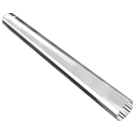
Glass Rods
We manufacture glass rods from diameter ranging from 0.60mm to 8.00mm in length ranging from 5.00mm to 100.00mm.
Glass Rod Preforms
Glass rods can be used as preforms for glass molding application as well.
Rod Preforms
Rod Preforms are manufacture from renowned optical glass material makers like OHARA, HIKARI, SUMITA, SCHOTT, etc.
Looking for Ball Lens? Submit your requirements get a free Quote